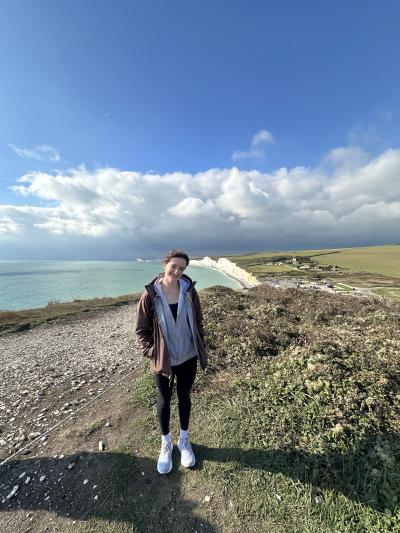
As an undergraduate student studying public health–global health and a student assistant for CHanGE, I have spent considerable time thinking about the intersection of climate and health. My experience studying abroad in a public health program solidified my understanding of climate change and its impacts on health as a defining challenge of our time. In London, England, I observed how cool cities are responding to rising heat, similar to local challenges here in Seattle. In Kingston, Jamaica, I witnessed the aftermath of a powerful hurricane and the resilience of the people affected by it. In this blog, I reflect on my experiences abroad, drawing connections between climate impacts overseas to those here in Washington state, highlighting the importance of the work that CHanGE and similarly-minded organizations are doing to surpass boundaries and address the growing threat of global climate change.
London, heat, and green spaces
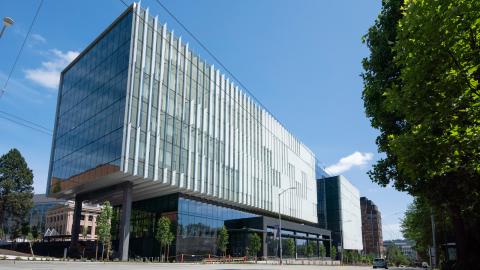
In London, I was struck by the sheer scale of nature-based areas accessible to the public. It came as no surprise that London was declared the world’s first National Park City with nearly 50 percent of the city green or blue when viewed from above due to the city’s 3,000 parks, network of water bodies, and green infrastructure. In my study abroad program, we discussed how these spaces are more than just amenities – they are critical public health infrastructure that protect communities from the risks of a changing climate.
As temperatures climb across the globe, green spaces play a growing role in environmental sustainability. These spaces are important mitigators of the heat island effect – the phenomenon of urban areas experiencing warmer temperatures due to human-made surfaces absorbing and retaining more heat.
CHanGE is committed to building resilience to extreme heat. Our Community Heat Resilience Tool (CHaRT), for example, maps heat-related health risks and recommends location-specific strategies for decision-makers to keep communities safe. Green spaces are one of the many strategies recommended by CHaRT due to their adaptive and mitigative properties (e.g., reducing heat through shading and evapotranspiration, and sequestering carbon and encouraging active transportation, respectively). CHaRT provides detailed information for users to understand the intervention, its effectiveness, potential challenges, amenity values, cost, and implementation steps. As CHaRT continues to be developed, community engagement is a key priority to ensure the tool is informed by and responsive to communities' lived experiences.
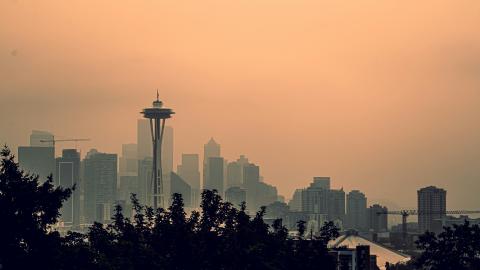
Like Seattle, London is generally thought of as a cool and rainy city. Yet, in 2022, and again in 2024, the city experienced record-breaking temperatures during a devastating heatwave. In summer 2022, heat contributed to an estimated 2,985 deaths, exposing housing, transportation, and health systems that were never designed to handle prolonged heat. This challenge feels especially familiar coming from Washington state and experiencing the 2021 Pacific Northwest Heat Dome, during which hundreds of residents died. Climate and health professionals are increasingly recognizing that the need for adaptation to heat extremes is urgent, and green spaces play a key role in this effort.
While in London, I also learned that adaptation depends not only on physical infrastructure, but on listening to the people it is meant to protect. I interned with Healthwatch, an organization dedicated to incorporating community voices into improvements in health and social care systems. Although this work was not explicitly climate-related, collecting feedback from residents and synthesizing data into reports reshaped how I think about effective solutions. Policies and interventions are only successful when they are informed by the people experiencing the problem. In the context of climate change, this means interventions like green spaces and heat action plans must be developed with communities, not just for them.
Jamaica, Hurricane Melissa, and community resilience
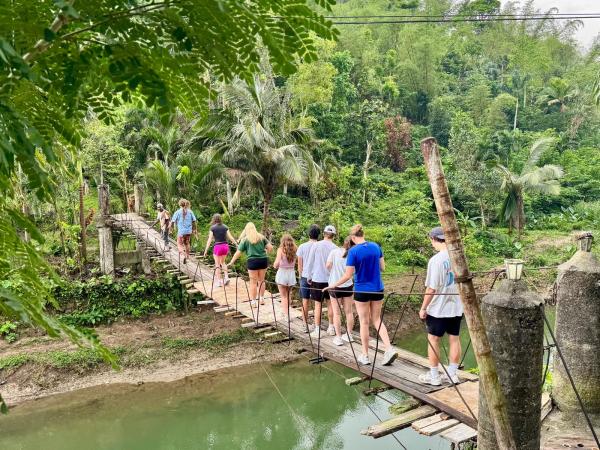
In Kingston, Jamaica, Hurricane Melissa – a category 5 storm with 185mph winds that destroyed homes, hospitals, and other infrastructure, killing 32 people and affecting 1.5 million more – struck the island just weeks before our arrival and its impacts were still visible throughout the country. This was an eye-opening experience that offered a powerful, real-time example of climate-driven disasters and community resilience.
While volunteering in hospitals and taking classes at the University of the West Indies School of Nursing (UWISON), I witnessed the strain the storm placed on health systems, such as structural damage to hospitals and the displacement of health care workers, but also the extraordinary resilience of communities.
Despite the rawness of the tragedy, what I observed was an overwhelming sense of courage and unity. Dr. Cynthia Pitter, the Head of School at UWISON, explained this widespread attitude of resilience among Jamaicans with the following quote: “The ‘no problem’ mindset isn’t about indifference. It’s about control. By choosing calm, Jamaicans reshape chaos into clarity. It’s not that there are no problems. It’s that we refuse to be owned by them.” This grounding in resilience is symbolic of Jamaican’s strength that most certainly prevailed after Hurricane Melissa.
This experience instilled in me the importance of the work that organizations like CHanGE are doing to build global resilience to climate-related disasters by co-creating solutions with communities. Our Global Fund–supported project exemplifies this dedication. The project entails conducting rapid landscape analyses across four countries – Mozambique, Kenya, Zambia, and Zimbabwe – to better understand how climate risks intersect with HIV, tuberculosis, and malaria (HTM). A key pillar of this work is meaningful collaboration with in-country partners to understand what the community’s actual needs are, so relevant solutions can be developed.
I also noticed a powerful cultural norm of communal support. One Jamaican farmer and engineer, for example, noticed that a gap between two separated sides of land was presenting a barrier for rural residents to receive necessary care. He took matters into his own hands, building a bridge to connect the two sides, which acts as a way for health care workers to reach rural residents and give them the care they need.
The situation of Hurricane Melissa is a glaring example of climate injustice, the phenomenon reflecting that those who contribute the least to climate change are often the most impacted. According to the Union of Concerned Scientists, 80% of all current greenhouse gas emissions are from just 20 countries, with China and the U.S. accounting for more than 40%. Beyond the ethical concerns that this raises, putting the responsibility on vulnerable communities for addressing climate impacts leads to a less cohesive and sustainable response. Research shows that coordinated regional and national strategies are best suited for reducing vulnerability and limiting further dangerous climate change, including parallel government investments in social and health protections as well as mitigation and adaptation efforts.
Lessons learned: Climate impacts are here, disproportionate, and require collective action
Applying a climate and health lens to reflect on my study abroad experience has made several takeaways glaringly obvious.
- Climate change is not a distant threat – it is an interconnected, present reality. A 2025 Pew Research Center survey of 25 nations found that 67% of adults view climate change as a major threat to their country. Real conversations brought this statistic to life for me: discussions in London about rising heat risk echoed what I witnessed back home in Washington during the 2021 Pacific Northwest Heat Dome. Cities historically known for gray skies and mild summers are now confronting temperatures their infrastructure was never designed to withstand. Climate change is no longer something happening “somewhere else” – it is happening everywhere, right now.
- Who is most affected by climate change is not random. Social, economic, and political systems determine who is protected and who is vulnerable. Engaging in community-based work in Jamaica so soon after Hurricane Melissa gave me firsthand exposure to the ways hospitals, homes, and human lives are impacted by climate-related disasters. As events like hurricanes intensify and become more frequent, vulnerable communities in the U.S. and around the world will continue to bear disproportionate burdens.
- Resilience begins with community, but it cannot end there. The unity I witnessed in Jamaica – neighbors supporting one another, health care workers continuing care despite limited resources, and individuals stepping up to solve problems – was inspiring. However, lasting protection necessitates system-level change, including the continued development of strong public health infrastructure, proactive adaptation planning, and policies that prioritize those at greatest risk. The value of partnerships in this effort cannot be overstated. Collaborative, coordinated efforts are stronger than fragmented responses.
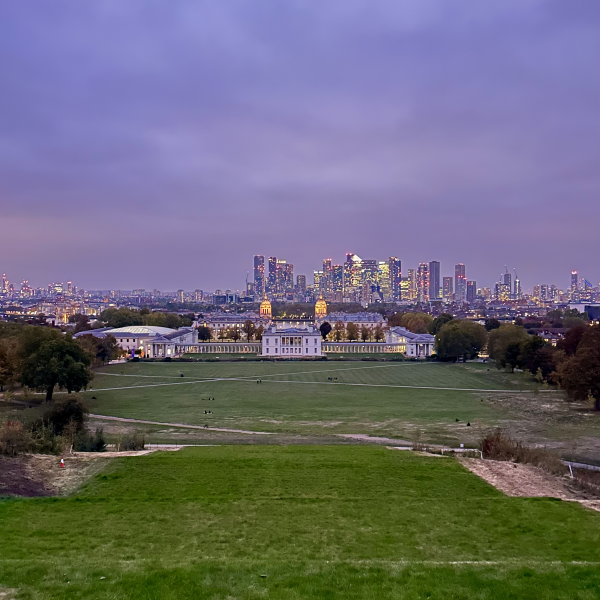
Together, these experiences deepened my understanding of the role that organizations like CHanGE play in responding to climate change. The Center works at the intersection of research, policy, and community engagement to build climate-resilient health systems. Whether mapping heat-health risk, co-developing adaptation strategies with international partners, or studying projected climate impacts, CHanGE translates evidence into action that supports communities worldwide. My time abroad confirmed that this work is not abstract; rather, it directly shapes how people live, recover, and stay healthy in a changing environment. It also clarified my own path: I want to contribute to building systems that protect health, center community knowledge, and turn data into decisions that safeguard both people and the planet.
- Heat
- Student Spotlight