In this third edition of our series Meet the New Faces of CHanGE, we spotlight a group of students who joined the center this winter to work on a major Global Fund–supported project. The project focuses on rapid landscape analyses across four countries – Mozambique, Kenya, Zambia, and Zimbabwe – to better understand how climate risks intersect with HIV, tuberculosis, and malaria (HTM). A key outcome of this work is the development of Vulnerability, Capacity, and Adaptation (VCA) reports for each country, which are evidence-based plans designed to strengthen climate-resilient health systems.
Spanning 15 months, the project brings together climate and health researchers at CHanGE, global health experts at the International Training and Education Center for Health (I-TECH), academic partners at the University of Washington and the University of Melbourne, and in-country collaborators. Its scope is ambitious, and students play a critical role in moving the work forward. Meet the students behind this effort and learn how their perspectives, skills, and curiosity are helping translate complex climate and health challenges into action across diverse global contexts.
Stélio Tembe, MD, MPH
Global health leadership and practice doctoral student
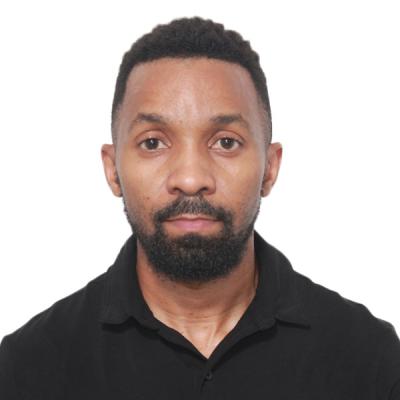
CHanGE research assistant
Tembe joined CHanGE while pursuing his doctorate in global health leadership and practice, bringing a perspective shaped by lived experience in Mozambique. His work is grounded in the importance of tailoring climate and health solutions to local contexts – using evidence-based data and meaningful stakeholder engagement to inform policy and practice. That approach is what draws him to the Global Fund project. “It combines rigorous research, systems thinking, and practical experiences,” he explains.
Trained as a medical doctor with extensive experience in public health leadership roles in Mozambique, Tembe completed his master’s at the UW. In Mozambique, he lived through multiple extreme weather events, including Cyclone Idai in 2019, the deadliest cyclone in Africa. “It made it clear to me that climate change is manifesting in more deadly and frequent ways. And it's not just an environmental issue. It’s also a public health and equity issue,” he shares. After witnessing the disproportionate impact of climate change, Tembe particularly appreciates that the Global Fund project is “explicitly focused on ensuring that climate and health responses are inclusive and designed based on country-specific realities.”
Tembe hopes to continue supporting governments and global health organizations in building climate-resilient health systems. What keeps him motivated is the opportunity to contribute to solutions that prioritize equity and protect communities facing the greatest risks – turning evidence into action where it matters most.
Ethan Hume
Health systems and population health graduate student
CHanGE research assistant
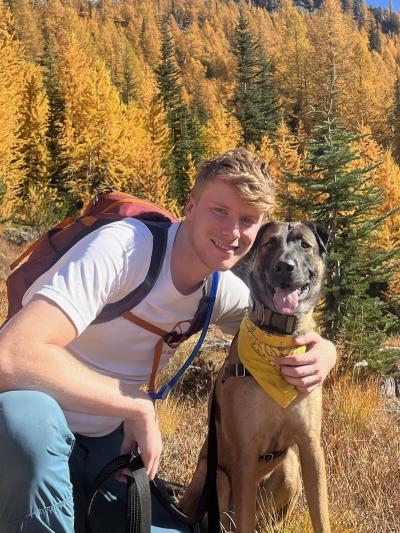
Hume, a second-year master’s student in health systems, has been expanding his understanding of global health through the Global Fund project. With experience primarily in U.S. health systems strengthening work, Hume says, “Working with four different countries has been pushing me to restructure the way I think, which is challenging but really, really rewarding.”
Professional and personal experiences shape Hume’s commitment to climate-related work. As an undergraduate in New Orleans, he trained as an emergency medical technician and worked through multiple hurricanes, witnessing firsthand how extreme weather can overwhelm health systems. The growing threat of wildfire smoke remains ever-present for him, with vulnerable family members in northeast Washington and a close friend in Los Angeles who lost their home to wildfires last year.
Work experiences in in-home urgent care and community health programs serving Medicaid populations have further shaped his interest in reimagining health systems. His diverse experiences drew him to CHanGE, noting, “The Center is very much focused on strengthening health systems in the context of climate change, which is exactly what I’m interested in.”
What motivates Hume most is people and the many ways they show up to solve problems. He adds, “It's invigorating to see so many people trying to solve climate and health problems in their own way and wherever they can contribute the most.”
Angelina Durbin
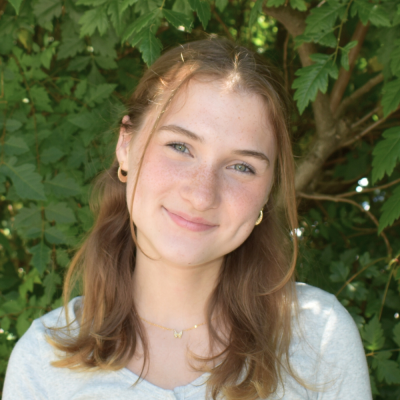
Environmental public health undergraduate student
CHanGE Global Fund student assistant
Durbin joined CHanGE to support administrative tasks for the Global Fund project, growing her ability to navigate the complexities of project management and communications inherent in working with large-scale funders. Her journey with the Center began during summer 2025 as an EarthLab intern working on communications. One of the highlights from this internship was the creative freedom she had in preparing several blogs, nodding specifically to her story about climate resilient food systems.
Graduating this spring with a bachelor’s in environmental public health and a minor in nutrition, Durbin is especially interested in how environmental and food systems shape human health. Through food recovery work, from redistributing surplus campus food through the UW Food Pantry to helping launch the UW chapter of Free Food Alert, she says she has found her "niche within environmental health – sustainable food systems.”
Action-oriented by nature, Durbin values CHanGE’s emphasis on implementation. “CHanGE is not only talking about issues, but they’re also actively doing things to tackle challenges.”
Looking ahead, she plans to pursue her master’s and work at the intersection of environmental health, food systems, climate adaptation, and policy. Wherever her path takes her, she says, “I always want to stay zoomed in close to communities, to not lose touch with the people I’m actually aiming to serve.”
- Food Systems
- Student Spotlight