The health care sector’s contribution to climate change is alarming, accounting for 4.4% of global net greenhouse gas (GHG) emissions, according to a comprehensive global report by Health Care Without Harm. The United States contributes the largest share to these emissions, representing 27% of the global health care footprint.
While health systems drive climate change, they are simultaneously impacted by the resulting consequences. For example, during the 2021 Pacific Northwest Heat Dome, health systems reported a dramatic influx of patients with heat-related illnesses, alongside individuals seeking shelter from the heat. They also experienced infrastructure failures, including air conditioning breakdowns, power and water system issues, and equipment malfunctions. These impacts compounded, and the health care workforce was strained due to fatigue from increased workload, heat exposure, lack of adequate cooling, and sparse coordination and preparation.
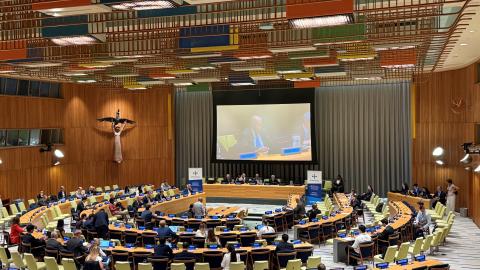
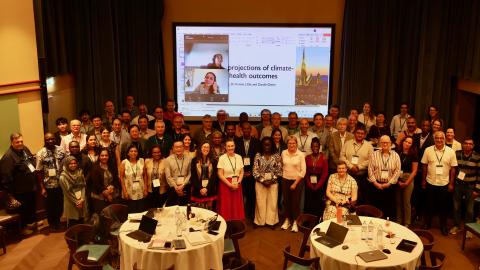
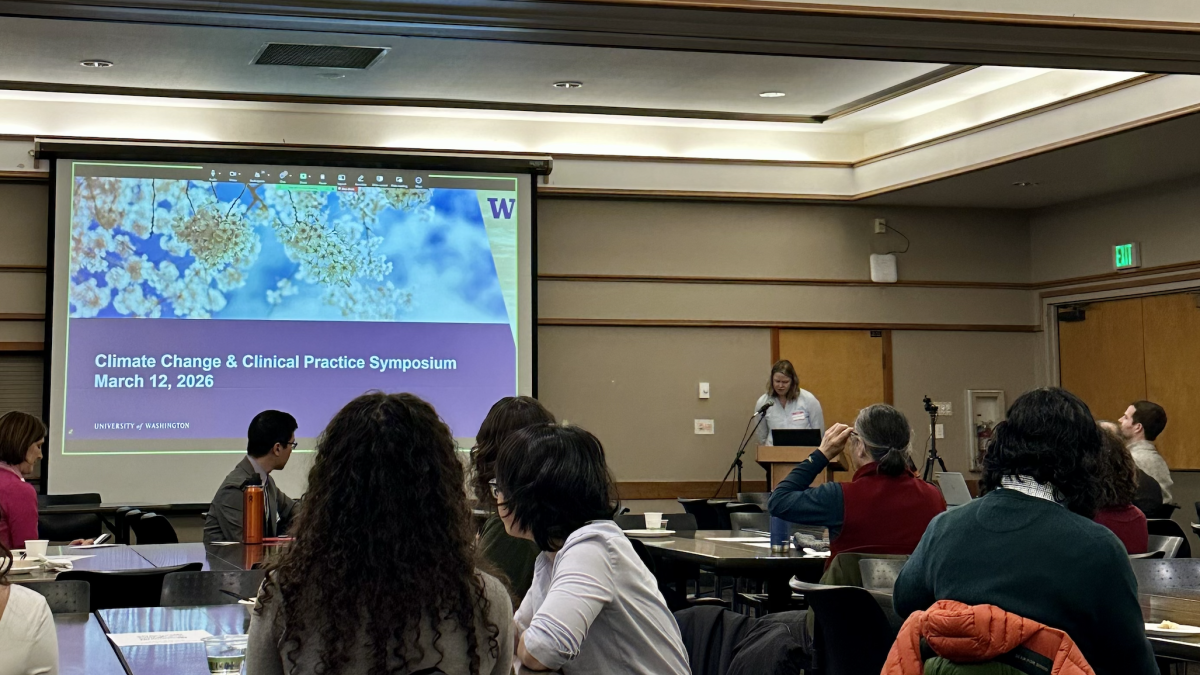
Stakeholders from across the PNW gathered recently at the 3rd Annual Symposium on Climate Change and Clinical Practice to consider the widespread implications of the climate crisis on our health systems, not just from extreme heat, but also from microplastics, wildfire smoke, food system disruptions, and more. This event, hosted by UW Medicine, UW Sustainability, EarthLab, and CHanGE, facilitated a practical exploration of ways to build climate resilient health systems, as well as methods to create more sustainable clinical environments.
This blog highlights high-level takeaways from the symposium, drawing on insights from the range of speakers to identify key opportunities for health systems and professionals to better prepare for and respond to climate-related challenges.
A “climate lens” can be embedded into existing health systems
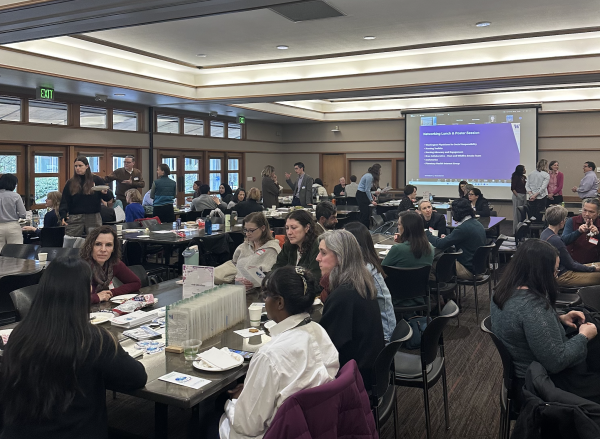
Tackling climate action in the health care sector may seem like a daunting undertaking. However, a recurring message that emerged from the symposium offered an encouraging way forward. That strategy is to embed a “climate lens” into existing health care priorities. In practical terms, a climate lens represents the evaluation of waste generated or saved, or the resilience of a process to severe weather events.
The event’s keynote speaker, Komal Bajaj, MD, shared her experience translating this approach into clinically credible, scalable solutions as the Former Medical Director of Sustainability at NYC Health + Hospitals. Her team leveraged existing goals by instructing service lines to add a climate lens to just one of their previously established annual projects.
One project that did this, titled Compassion for the Community: Continuing Care after Death, was recognized nationally. The existing goal of this initiative was to improve the efficiency of the hospital morgue, a structure that tends to be overrun and at capacity in the U.S., presenting a barrier to both hospital operations and grieving among the bereaved. Oftentimes, when morgues are full, refrigerated trucks need to be run to accommodate. A climate lens was incorporated into this project by examining GHG emissions saved from the avoidance of refrigerated truck use.
All it takes is one initial step, even as simple as identifying organizational goals and looking for ways to synergize financial or operational aims with climate action. As Bajaj put it, “My whole ethos here is don’t build new structures…use existing structures and pick one existing opportunity to get started.”
Several other speakers echoed this precedent, illustrating that there are almost always existing opportunities and structures within health systems that climate action can be incorporated into – you just have to identify them. For example, Trang VoPham, PhD, MPH, of Fred Hutch, demonstrated how existing infrastructure like electronic health records, can be leveraged to deliver targeted, climate-informed interventions. By integrating geospatial air quality data into patient outreach, her team translated epidemiological insights into real-time guidance for vulnerable populations without creating entirely new systems.
Solutions must be community-driven
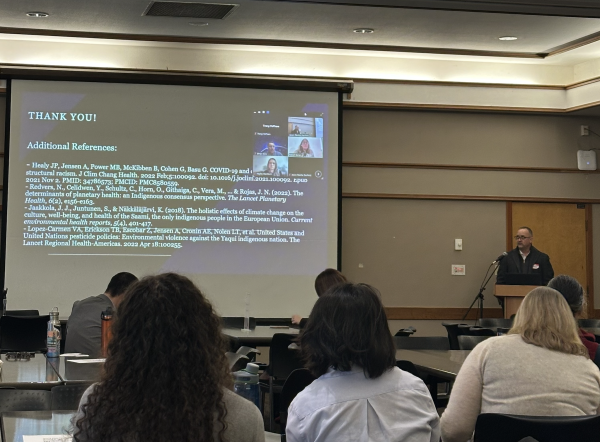
If efforts aimed at sustainability and climate resilience in health systems are to be successful, they must be shaped by the communities they intend to serve. This requires that building trust, centering equity, and cultivating meaningful partnerships are treated as imperative steps – not optional ones.
Brian G. Henning, PhD, spoke about his experience as the inaugural director of the Institute for Climate, Water, and the Environment at Gonzaga University, which works to build climate resilience across the Inland Northwest through community-centered approaches.
Through initiatives like the Spokane Community Resilience Collaborative (SCRC), a city-wide, interdisciplinary effort, his team has advanced projects ranging from citywide action planning to resilience hubs and household-level preparedness tools. Across this work, a consistent principle has guided their approach: “Nothing about us, without us.” As Henning emphasized, progress depends on trust, and trust is built through sustained relationships with the communities most affected.
This emphasis on community partnership also underscores a broader theme of climate justice. Victor Lopez-Carmen, MD, MPH, a Dakota and Yaqui writer and Indigenous climate health advocate, expanded on this idea by emphasizing how climate change and justice are inseparable from Indigenous rights, land, and knowledge systems. Traditional foods and practices, he emphasized, are not only culturally significant but are also protective against chronic diseases such as diabetes, yet have been systematically undermined by both policy and environmental change.
Everyone in health care has a role
Regardless of job title, everyone in health care is uniquely positioned to drive change.
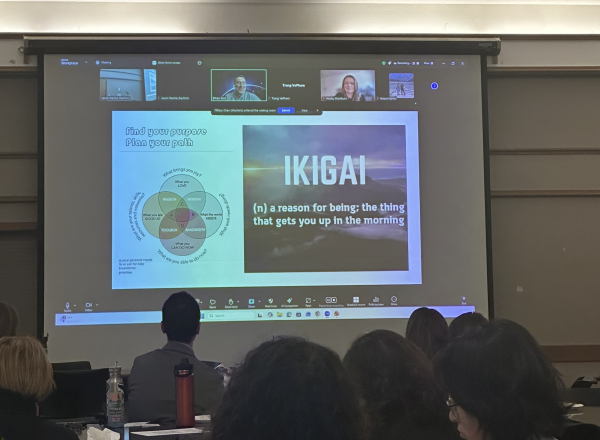
Ethan Sims, MD, FACEP, shared his journey into climate and health as an emergency room physician in Idaho, inspiring others to find their own path. Through his work and encounters with wildfire smoke, he increasingly began to realize the significant threat that climate change is already posing to human health.
This propelled him on a journey to “depoliticize climate change and decarbonize health care.” In 2021, he founded Idaho Clinicians for Climate and Health, an organization aimed at reducing the health impacts of climate change through innovation and sustainability in healthcare, expanding knowledge through a non-partisan approach, and facilitating community action and advocacy.
Getting involved, Sims explained, “starts by finding your purpose and what you’re good at.” He referred to the Japanese phrase “Ikigai,” which means ‘a reason for being,’ and ‘the thing that gets you up in the morning.’ Sims, for example, knew he was good at facilitating collaborations, and he found deep meaning in taking action on a problem that, at times, feels overwhelming – noting the phrase “action is the antidote to despair.”
Another powerful example came from Sheela Sathyanarayana, MD, MPH, of Seattle Children’s Hospital. She spoke about microplastics and health, and was recently featured on an NPR Soundside podcast, providing guidance about what exactly these particles are, and how or if we should avoid them.
During her presentation, Sathyanarayana stressed the importance of translating emerging science into practical guidance to empower patients with accurate knowledge. “This work is multidisciplinary,” she explained. “Working towards change will take all of us, and your expertise is needed in so many ways…finding ways to communicate what you know is more impactful than you might think.”
Meet the speakers
Komal Bajaj, MD, Professor, Albert Einstein College of Medicine, Former Medical Director of Sustainability, NYC Health + Hospitals
Bajaj described how embedding a “climate lens” into existing health care priorities can improve both sustainability and performance within hospital settings.
Jason Lau, MD, MS, Clinical Informatics Fellow, Pediatrician, Seattle Children’s Hospital
Lau spoke about the growing use of AI in health care settings, acknowledging both its clinical and operational benefits, as well as its environmental and human health costs. He argued for a system-level, balanced, and multi-angled approach that prioritizes high-value, low-waste use of AI.
Brian Henning, PhD, Professor of Philosophy & Environmental Studies & Sciences, Director, Gonzaga Institute for Climate, Water, and the Environment
Henning emphasized the public health crisis that extreme heat is posing, urging action that centers on community-driven climate resilience and prioritizes trust and relationship building.
Pilar Calderin, Cooling Portland, Sr. Climate Justice Program Manager, Earth Advantage
Calderin shared about the impact of Cooling Portland, a climate resilience program that provides life-saving and efficient portable heat pump and cooling equipment to low-income Portland residents.
Trang VoPham, PhD, MS, Associate Professor, Epidemiology Program, Public Health Sciences Division, Fred Hutch
VoPham explained how geospatial data can be used to better understand and address the health impacts of climate-driven hazards. She shared her team’s efforts integrating digital medicine informatics with geospatial data to inform targeted outreach during times of heavy air pollution, empowering at-risk patients to take preventative action.
Sheela Sathyanarayana, MD, MPH, Associate Director, Center for Child Health, Behavior and Development, Seattle Children's Research Institute
Sathyanarayana discussed microplastics and their associated chemicals, including where they come from and their impacts on health. While more research is needed, she highlighted the importance of reducing exposure through simple everyday choices and by translating emerging science into actionable guidance.
Ethan Sims, MD, FACEP, Vice President, Idaho Climate Health Professionals
Sims encouraged all health care professionals to use their unique skills and roles to drive meaningful change in climate and health, emphasizing the importance of identifying what you do best and what motivates you.
Hayley Blackburn, Pharm.D, Associate Professor, University of Montana
Blackburn illustrated the valuable role pharmacists can play in climate and health because of their accessibility and trusting relationships they establish with the public, allowing them to address risks through patient care, education, and community-based interventions.
Lori Byron, MD, MS, Board Chair, Montana Climate Health Professionals
Byron emphasized the unique position of health care professionals as trusted messengers to engage patients, communities, and other professionals on climate and health by using practical tools, locally tailored messaging, and partnerships.
Victor Lopez-Carmen, MD, MPH, Resident-physician in pediatrics at the Seattle Children's Hospital, University of Washington
Lopez-Carmen drew attention to how climate and health impacts are deeply intertwined with Indigenous rights violations and environmental injustice, noting that climate resilience efforts must safeguard traditional lands, food systems, and sovereignty.
- Faculty Spotlight
- Food Systems
- Heat