Students are an essential part of CHanGE’s community – bringing curiosity, tenacity, and new ways of thinking to challenges at the intersection of climate and health. At CHanGE, students not only learn but also contribute in profound ways to our research and practice. With climate presenting a constantly changing and growing threat to human health, it is critical that we support the next generation in tackling this complex challenge. This second edition in our series, Meet the New Faces of CHanGE, highlights some of the students who have recently joined our community and the rich perspectives they bring to the Center.
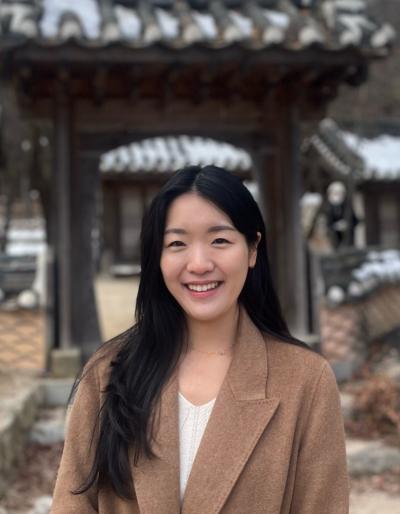
Haemin Park, MPH
Environmental health sciences doctoral student
CHanGE research assistant
Since beginning her doctorate in fall 2024, Park has supported CHanGE’s IMPACT project, which examines the mental health impacts of climate change in Pacific Island Countries. As part of this work, she will visit the Solomon Islands. “Cultural and social contexts are often not fully captured in quantitative data,” she explains. “I am eager to learn from the stories and perspectives that emerge through community-based field research.”
During her master’s program in Korea, Park examined cause-specific excess mortality during the COVID-19 pandemic. She has also worked on several large-scale environmental health projects, including the installation of air quality monitoring systems in ASEAN (The Association of Southeast Asian Nations) countries and the development of heatwave early warning systems in Korea.
Personal experiences living in Manila, the capital of the Philippines, deepened her motivation to address climate and health inequities. “I witnessed frequent flooding and cyclones, and I saw how these events disproportionately affect unhoused populations,” she shares. This transformed climate justice from an abstract idea into a lived reality.
Park hopes to become a researcher generating evidence to support climate and health decision-making in low- and middle-income countries. She sees CHanGE as an ideal environment to learn how research can contribute to real-world impact and values the sense of connection the Center fosters. She explains, “Engaging in thoughtful conversations with people who share a commitment to climate and health is energizing.”
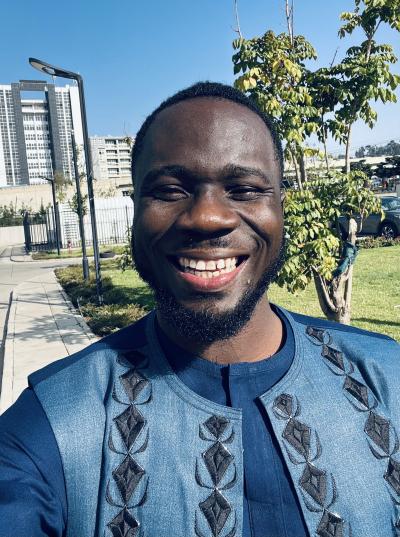
Anderson Flomo, Jr., MD, MPH, Esq
Global health leadership and practice doctoral student
CHanGE research assistant
Flomo joined CHanGE to support the Lancet Countdown, a project tracking climate change and health risk indicators. He values the project’s focus on global and diverse collaboration, which continues to expand his climate and health perspective.
Trained as a physician with additional degrees in law and public health epidemiology, Flomo held national leadership roles within Liberia’s Ministry of Health, including serving as deputy director for environmental health. He also worked as a surveillance officer during the Ebola crisis.
Flomo began his academic journey at the University of Washington in 2023 through the International Program in Public Health Leadership and is now pursuing a doctorate in global health leadership and practice, alongside his work with CHanGE.
For Flomo, this work is deeply rooted in justice. “When I travel and engage with people in the field, I see the disproportionate effect of climate change,” he explains. “We need to have equitable access to resources and treatment plans so those most vulnerable can address the health effects of climate change.”
He is also committed to mentoring future leaders, noting that “being a role model for young people feels gratifying and impactful.” He even co-founded a non-profit in Liberia called the Consortium of Environmental Advocates, which engages youth in climate education and action.
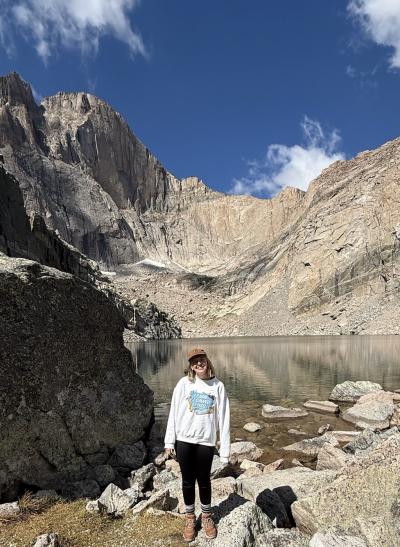
Carole Green, MPH
Environmental health sciences doctoral student
CHanGE research assistant
Green re-joined CHanGE in 2024 as a doctoral research assistant, continuing work from her master’s program in 2021 on the Shared Socioeconomic Pathways (SSPs), which model how the world may evolve through 2100. She also completed CHanGE’s Graduate Certificate in Climate Change and Health, gaining an interdisciplinary understanding of how society and human health are impacted by a changing climate, and real-world experience completing a capstone project with a partner organization.
After completing her master’s, Green spent two years in Australia working with communities to explore strategies for keeping people safe during extreme heat.
Driven to help solve what she describes as “the big problem of our generation,” Green’s return has advanced work on integrating health into long-term climate modeling through the SSPs. She notes that while the SSPs are widely used in climate and impact research, health is not regularly included – making CHanGE’s work in this area “unique globally.” As she puts it, “It feels like we’re poking a tiny hole in a balloon and waiting for others to help make it pop.”
Looking ahead, Green plans to continue working in the climate and health space and is motivated by the scale of collective effort. “So much meaningful work happens quietly and behind the scenes,” she says. “It may not get the headlines, but it’s going on, and that feels really encouraging.”

Cordy Plymale
Public health-global health undergraduate student
CHanGE student assistant
Plymale first joined CHanGE in 2024 as an EarthLab intern, gathering stakeholder feedback to inform the development of the Community Heat Resilience Tool (CHaRT). In April 2025, she joined the Center again, this time as a student assistant. In this role, she supports administrative operations and offers targeted contributions across projects where additional perspective is needed, allowing her to gain broad exposure to the Center’s interdisciplinary climate and health work.
She is graduating this spring with a bachelor’s in public health–global health and a minor in data science. Through research integrating young adult perspectives into a novel measurement of climate distress, and work abroad in London and Cambodia focused on incorporating community voices into health systems, she has developed a strong interest in translating evidence-based research into actionable solutions – a key focus at CHanGE. Plymale admires CHanGE’s collaborative approach to this work, saying, “Solving climate and health challenges requires working together across sectors and engaging with communities most affected.”
Plymale plans to pursue a master’s in public health epidemiology next year, continue work with CHanGE, and ultimately advance evidence-based climate and health solutions. She remains optimistic that challenges in this space can be tackled. “The rhetoric around climate and health is often doom and gloom but this puzzle, though deeply complex, has the potential to improve lives, and real progress is already being made.”
- Heat
- Student Spotlight