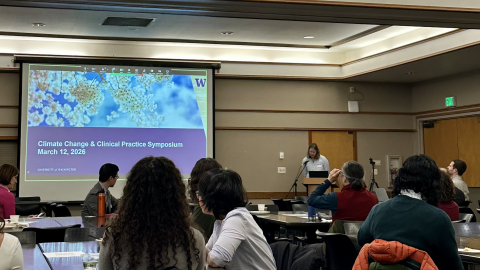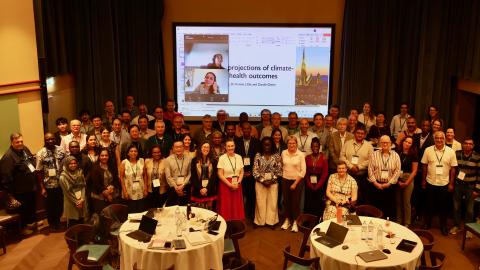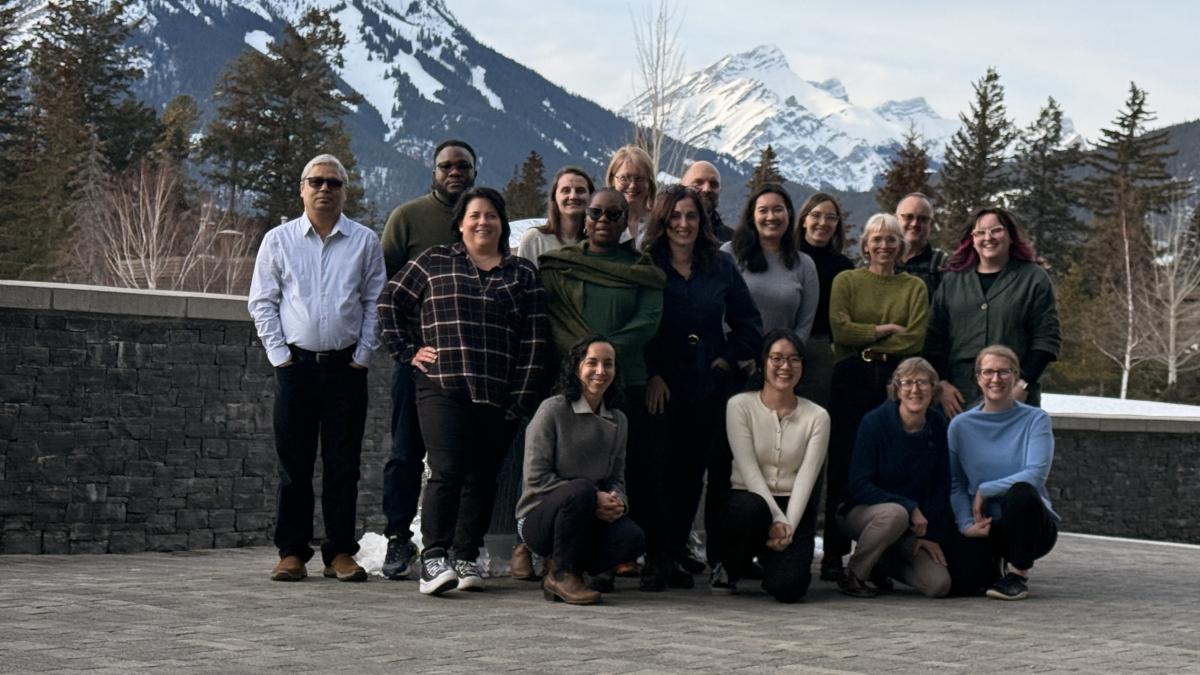
This spring, doctoral student Haemin Park, MPH, and CHanGE director Jeremy Hess, MD, MPH, traveled to Banff, Canada, to participate in a workshop focused on advancing climate-mental health research and resilience. This workshop took place as part of the three-year-long IMPACT project, which stands for Interdisciplinary Mental Health Perspectives on Adapting to Climate Threats. Supported by Canada’s New Frontiers in Research Fund, this project is led by the University of Alberta and brings together more than 50 experts from across the globe. Together, they are working to strengthen mental health resilience among those most affected by climate change. To ensure meaningful co-production of knowledge, case studies are being conducted in eight countries that are particularly vulnerable to climate-related hazards. Park, Hess, and CHanGE founding director, Kris Ebi, PhD, MPH, are leading a case study in the Pacific Islands.
Putting adaptation strategies into action
Extreme weather and climate events such as wildfires, extreme heat, and hurricanes are associated with poor mental health outcomes, including post-traumatic stress disorder (PTSD), depression, and anxiety. These outcomes are often exacerbated by stressors that come in the aftermath of disasters, such as the loss of homes and belongings and forced migration. In addition to direct experiences with disasters, more gradual changes like warming temperatures and air pollution are also contributing to mental health problems. For example, as people learn more about climate change and extreme weather, anticipatory distress is becoming increasingly common. Terms like “eco-anxiety,” “solastalgia,” and “climate distress” are all currently used to describe these very real psychological and emotional responses to climate change.
Importantly, these mental health impacts are not felt equitably. Children and young people are particularly vulnerable due to developmental and physiological sensitivities, as well as heightened feelings of hopelessness and a sense of betrayal due to perceived inaction. The elderly face increased risk from social isolation and pre-existing conditions. Lower-income populations tend to reside in closer proximity to climate-related hazards and have worse access to protective resources. Farmers and Indigenous peoples are also disproportionately impacted due to their close dependence on and connection to the natural environment.
The situation, however, is not without hope. A range of adaptation strategies do exist that can help communities adjust to these impacts and reduce risk, including expanding access to mental health care, monitoring mental health during climate-related disasters and extreme weather events, and developing resources specifically tailored to climate-related psychological challenges. The task lies in putting these strategies into action, particularly in the areas most affected.
This is exactly the gap that the IMPACT project seeks to fill. Through international and cross-sectoral collaboration, this initiative is not only seeking a more nuanced understanding of the mental health impacts of climate change, but also identifying the specific actions needed to build resilience at local and global scales.
Experts convene in Banff, Canada
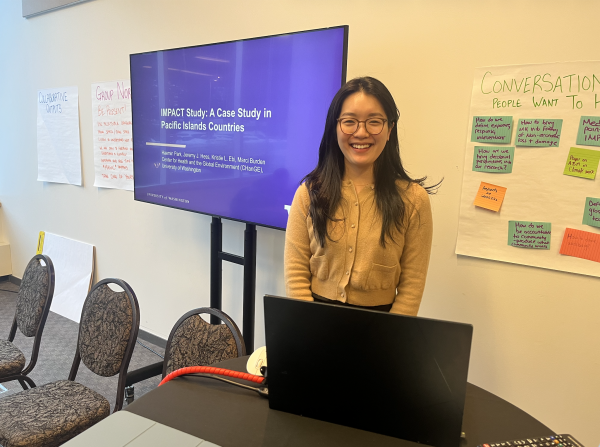
Within the IMPACT project, the CHanGE team is conducting a case study in the Solomon Islands, one of the Pacific Island Countries (PICs) located northeast of Australia. PICs are particularly vulnerable to weather extremes, including cyclones, floods, and sea level rise, which increasingly threaten the mental health and well-being of their populations. Characteristics such as geographic isolation, which can make healthcare service delivery challenging, and a strong cultural connection to and reliance on nature, intensify these challenges.
In collaboration with government officials and research institutions within the Solomon Islands, the CHanGE team is gaining a deeper understanding of the climate-mental health impacts in the region to provide evidence for future adaptation strategies. “Together, we have discussed community needs and national priorities, and our team has worked to incorporate these into our research design,” explains doctoral student Haemin Park, MPH. “This experience has highlighted the importance of trust and relationship-building from the very beginning.” Ultimately, this research will inform recommendations to develop a national mental health emergency response plan in the Solomon Islands, which is one of the priorities for the nation in the next three years.
At the recent workshop in Banff, international experts working on the IMPACT project convened to lay the groundwork for cross-cutting outputs that will advance climate-mental health research, policy, and practice. Central to this workshop was collaboration between case study teams to learn from each other’s progress, share knowledge, and increase the potential for impact, both individually and collectively within the project.
“Exchanging insights with researchers from other case studies and hearing their fieldwork-related advice was invaluable,” shares Park. Through engaging with a multidisciplinary group, Park shares that her understanding was broadened around how to successfully implement mental health interventions and consider the compounding impact of global challenges. She explains, “This opportunity allowed me to explore new dimensions of our research questions, including the implementation science of mental health interventions and the polycrisis aspects of mental health within communities.”
Co-designing research in the Solomon Islands
This summer, Park will travel to the Solomon Islands on behalf of the CHanGE team to lead on-the-ground engagement with community members and stakeholders involved in mental health and psychosocial support (MHPSS) during climate-related disasters. During her month in the Solomon Islands, Park will interview participants from the community and relevant stakeholders in collaboration with local researchers to identify locally-specific challenges and needs. These insights will inform the development of adaptation strategies. Park shares, “It is deeply motivating to consider how this research could contribute to meaningful, real-world impact in the Solomon Islands.”
For Park, this project has opened her eyes to “...what it truly means to co-design research with local communities.” Since the beginning of the project, the CHanGE team has been working closely with partners in the Solomon Islands by co-developing research questions based on the local needs. This has allowed for the research questions to be meaningfully based on local priorities and for the interview guidelines that Park will use while engaging with communities to be culturally appropriate.
“One of the most rewarding aspects of this project is that it has been genuinely co-designed with local partners,” highlights Park. “Engaging in conversations and building connections with people in the Solomon Islands has truly shaped how I approach research design.”
The IMPACT project is still ongoing and is expected to conclude in March, 2027. Readers interested in following its progress can look for future publications and other project outputs as experts continue to expand climate-mental health research.
- Heat
- Student Spotlight