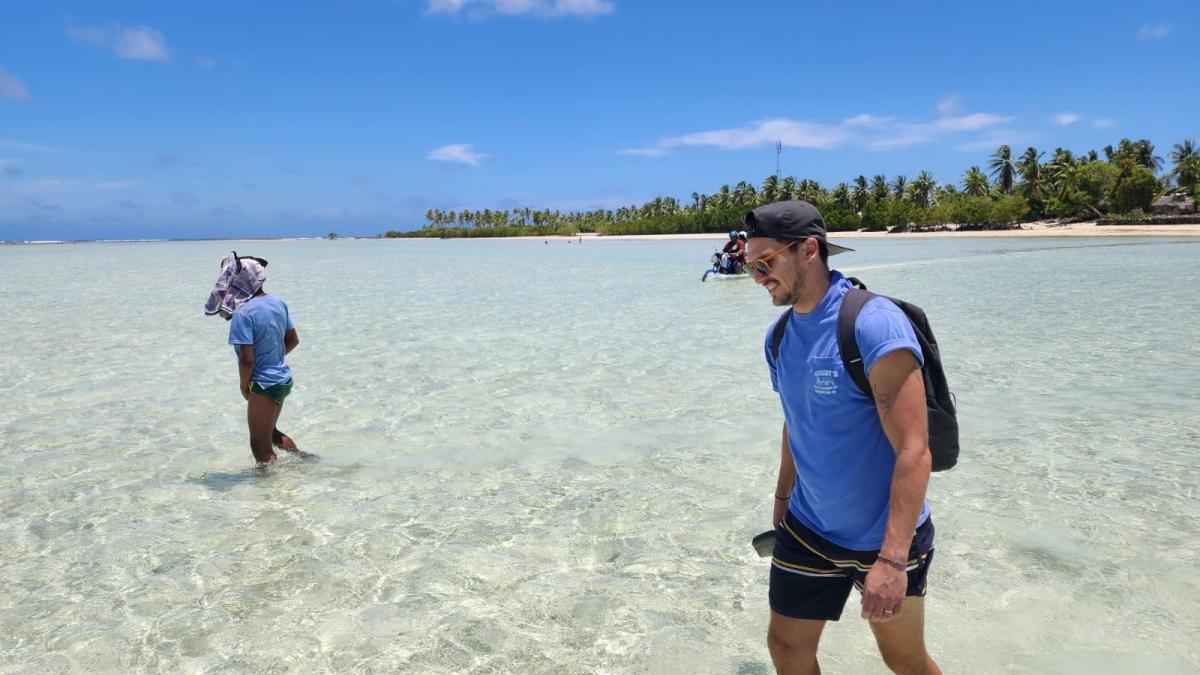
Nearly a decade since joining CHanGE, environmental health sciences doctoral candidate Chris Boyer, MPH, shares his “serendipitous” start at the center, reflecting on how one phone call snowballed into a deeply purpose-driven career in climate and health. Not long after its founding in 2015, CHanGE issued an open call for a research project in southeast Asia. With global health experience and interest in the region, Boyer called and wound up on the phone with the center’s founding director, Kris Ebi, PhD. The two of them discussed the opportunity to work in the Lao People’s Democratic Republic (PDR), which ultimately laid the groundwork for Boyer’s master's thesis. “It was just one phone call,” Boyer explains, “and my journey kind of exploded from there.”
Uncovering the links between climate and health
Boyer describes his pathway to climate and health, like many, as “non-linear.” After receiving his bachelor’s degree in anthropology and sociology in Kentucky, he joined the Peace Corps and was placed as a health volunteer in rural Zambia. This was Boyer’s introduction to public health work, and despite being new to the field, he found fulfillment in working at the community level to solve complex problems. He later realized that much of the work he was doing in Zambia – such as HIV/AIDS education, malaria prevention, and food security and nutrition promotion – was inextricably linked to climate. He explains, “These public health issues were all driven by climate hazards, we just weren't really talking about it.” For example, drought, which is an extreme deficit of precipitation exacerbated by climate change, affected the availability and quality of crops and water in rural Zambia, contributing to food insecurity and nutrition issues. In many ways, he was doing climate and health work before realizing it.
After three years in Zambia, Boyer had developed a passion for working with communities to tackle system-level determinants of health disparities. Eager to sharpen these skills, he enrolled in UW’s global health masters program, where his journey with CHanGE began. His master’s culminated in the completion of his thesis exploring the capacity of the Lao PDR’s health sector to manage climate change.
Boyer continued his work with CHanGE as a research coordinator after graduating. He also held consultancy positions with the World Health Organization (WHO), World Bank, and World Meteorological Organization (WMO). “I was jumping from project to project, and it was awesome because I got a ‘crash course’ in project management across different topics,” he says.
Two years later, in 2019, he decided to pursue his doctorate in environmental health sciences, and he will defend his dissertation this spring.
Boyer contends that his non-linear path in climate and health speaks to the work itself because of the many entry points that exist. He explains that CHanGE is particularly special in this respect because the center is not just focused on one topic. “There is such diverse expertise among members, creating opportunities to get involved with all kinds of climate and health disciplines…[such as] vectorborne and waterborne disease, nutrition, and extreme heat,” he explains. He also appreciates the center’s global reach. “I’ve always had a global interest, particularly in low-resource settings, and I haven’t come across another climate and health team with a focus quite like that.”
For Boyer, a core principle has remained important to him throughout his PhD journey – staying involved in country-level and community-based work. “I’ve always thought of myself as having a foot in both worlds: both academia and more applied, real-world efforts,” he shares. “Seeing real-time impacts keeps me grounded in the work I’m doing.”

Rooted in community-based work
Currently, much of Boyer’s time is dedicated to getting his PhD dissertation across the finish line. His project draws on interviews and focus groups across 14 Pacific Island countries and territories to examine how governments and partners are implementing climate and health adaptation initiatives. So far, his findings reveal that many jurisdictions exhibit strong foundations for climate and health adaptation, but are experiencing challenges in operationalizing these activities fully, due to several barriers, along with limited capacity for evaluating the effectiveness of interventions.
Beyond his dissertation work, Boyer also contributes to several ongoing projects at CHanGE. For example, through a fellowship with our partners at the University of Melbourne, he leads engagement with nine Pacific Island countries and territories on a Global Fund-supported project. The aim of this work is to understand how climate risks intersect with specific health outcomes across several countries and ultimately produce evidence-based plans to strengthen climate-resilient health systems.
Outside of the UW, Boyer is a climate and health technical advisor with the Red Cross Red Crescent Climate Center. Similar to his other work, this role centers primarily on the Pacific region. Here, he applies a more humanitarian-focused lens, facilitating anticipatory climate action – proactive steps to protect vulnerable communities before forecasted climate extremes and disasters occur.
While Boyer wears several different professional ‘hats,’ one throughline remains: his passion for centering those most impacted. “Working with different governments and partners in different countries has given me the opportunity to help solve really complex problems…and work with different people, understand their motivations, and come up with community and context-specific solutions.”
Staying grounded in people and place
Looking ahead, Boyer plans to continue climate and health work in the Pacific region. He also hopes to stay involved at CHanGE, nodding to the invaluable relationships he has developed with colleagues at the center, as well as the influential mentorship from leaders Kris Ebi and Jeremy Hess.
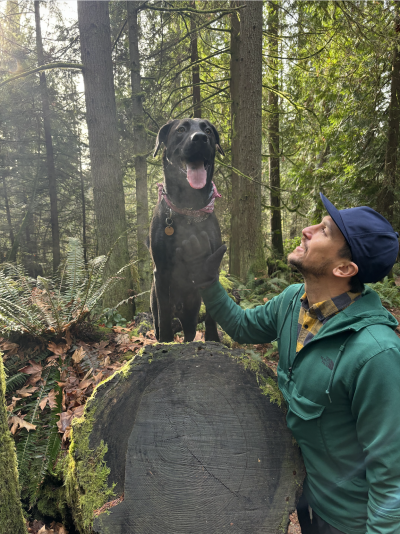
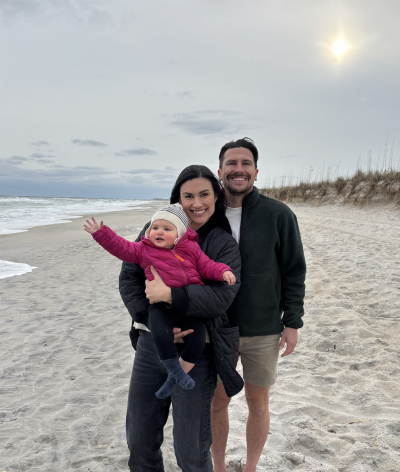
When he’s not working, Boyer spends much of his time with his wife Jade, their one-year-old daughter, Sloane, and their dog, Louie – often outdoors, surfing, and enjoying nature. That connection to people and the environment continue to ground him in his global and community-driven work.
Climate and health work is no stranger to challenges, but Boyer maintains an optimistic outlook. “There have been several times when I’ve started projects or been a part of projects that did not work out because of something out of our control. But, there’s a bit of beauty in this messiness,” he shares. “The biggest thing I’ve learned is that sometimes things will fail and that’s okay. Learning how to fail at things is good. That’s when you learn.”
- Student Spotlight